
Research Areas
Emergency Education during COVID school lockdowns in rural Ghana using WhatsApp and radio
Efficacy and cultural relevance of progressive education reform and standards-based instruction in formalistic rural Ghanaian school environments
Strategic collaboration within the African diaspora to improve teacher education, curriculum and instruction, and school leadership






Dissertation RESEARCH: the Use of Information and Communications Technology to Deliver Instruction and Professional development in Rural Ghana During COVID-19
My dissertation explored the following research questions: 1) What are the greatest challenges to education and teacher training continuity during the COVID-19 national lockdown in rural Ghana?, 2) Which form(s) of information and communications technology are available and effective in rural Ghana to address these challenges?, and 3) What were some of the best practices to deliver remote instruction in Sub-Saharan Africa during COVID-19?

Reflecting on our resilience at the Female Slave Dungeon, Elmina Slave Dungeons, Cape Coast, Ghana

Learning about Adinkra symbology at the Adinkra village outside of Kumasi, Ghana

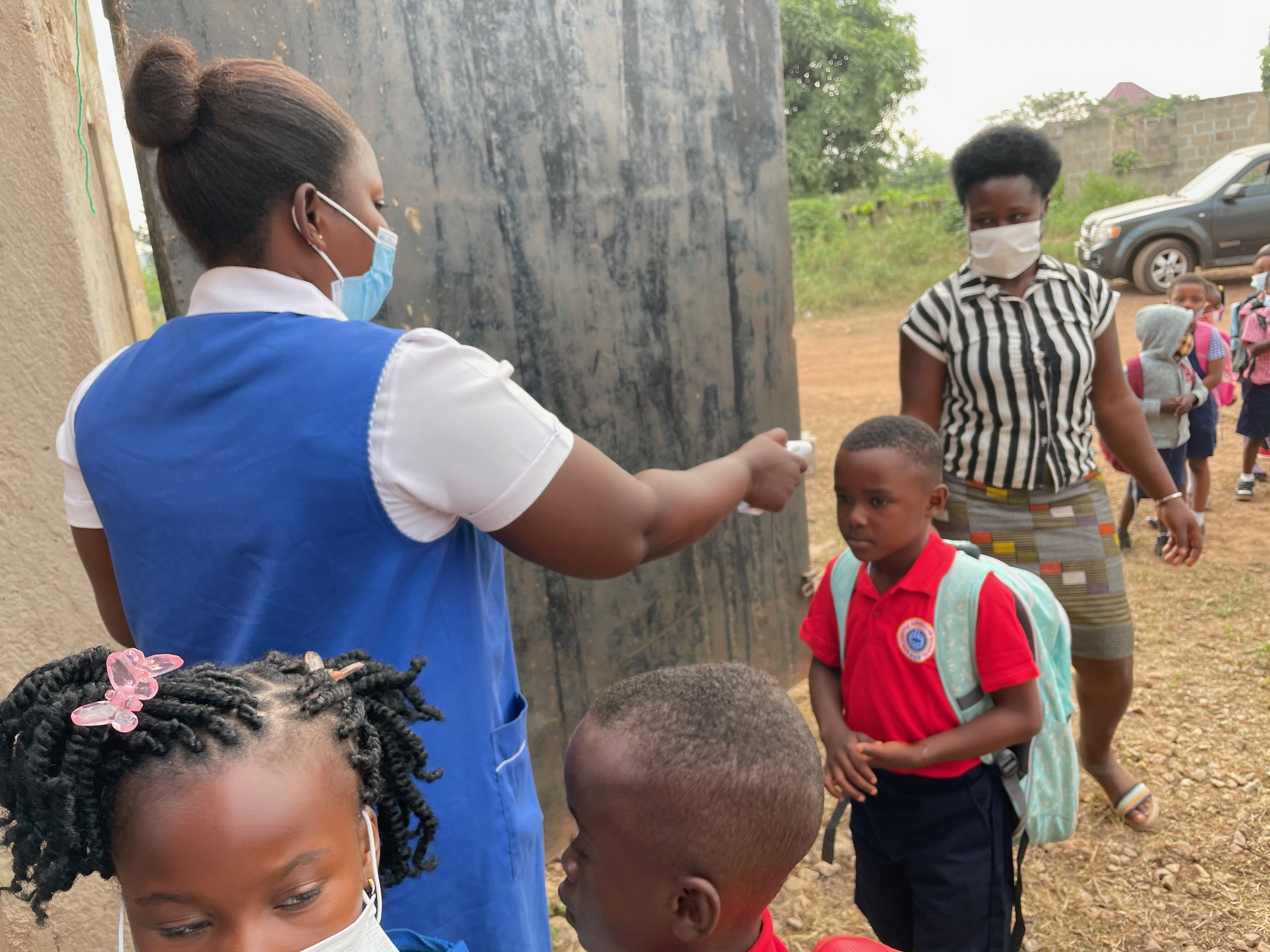
Greeting students on the first post-COVID day of school, January 2021, Senase-Berekum, Ghana
Research Residencies in Ghana
Residency 1: March 2019, Three weeks PARTICIPATORY ACTION RESEARCH & PROGRAM EVALUATION
To gain a better sense of cultural context for my work, I visited four regions throughout my stay, including: Accra, Kumasi, Cape Coast, and Brong-Ahafo (Senase). I led teacher trainings in Active Learning and Balanced Literacy alongside a fellow veteran educator and conducted a program evaluation of their teacher training program. Moreover, I networked with the community and visited local schools to have more context about Ghanaian school culture.
Residency 2: September 2019, two weeks Classroom Ethnographies
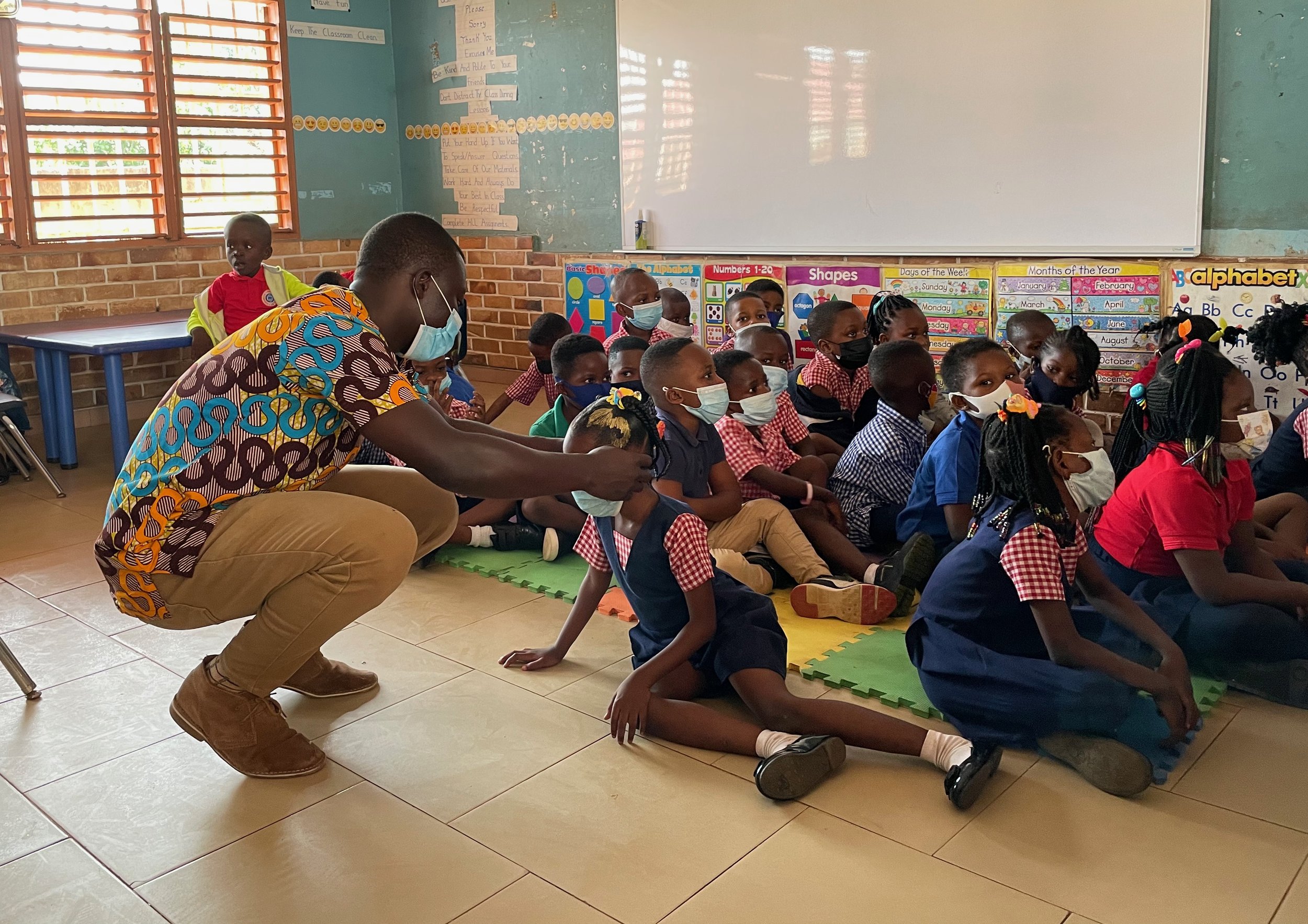
During my second residency, the purpose of my trip was originally to facilitate curriculum planning for Semanhyia’s new fifth grade class; however, I conducted a last-minute training for 40 faculty and staff in standards-based instruction because the Deputy Minister of Education instituted new teaching and learning standards the week before the start of school. I also assisted with Headmaster interviews and conducted administrator training and teacher observations.
Residency 3: January-February 2021, 4 Weeks Policy creation & implementation
During my third residency, the purpose of my trip was to assist with the creation of COVID-19 safety policy for the Semanhyia American School community in the anticipation of reopening. We acquired and distributed PPE; trained faculty, staff, students, and parents on COVID-19 safety guidelines; wrote emergency education policy and emergency education plans; and collaborated with the local Ghana Education Service and Parent-Teacher Association to reopen safely. We were so successful that we received recognition from the local Ghana Education Service for the effectiveness of our COVID-19 safety policies and procedures. We also wrote the school’s first parent and student handbook and facilitated a school-wide parent meeting and general school update.
Residency 4: West African Research ASsociation Post-Doctoral Research Fellowship, April-May 2023, Two Months
Participatory Action Research
As a WARA Post-Doctoral Fellow, I conducted an extended qualitative research project examining progressive education reform in rural Ghanaian classrooms. Building on my dissertation work and prior residencies, I designed and implemented a full field research methodology, including in-depth interviews, classroom observations, and ongoing community engagement, to examine how pedagogical practices and education policy intersect in rural school settings. This fellowship allowed me to deepen relationships with the Senase community I'd been working alongside since 2018, moving beyond individual research trips into a sustained, multi-year study of how progressive reform ideas take root, and sometimes stall, in formalistic rural school environments.